I want to go over each vaccine one by one, and this is as good a place to start as any, since it’s the vaccine given within 12 hours of birth.
Your baby comes into the world, and as they’re gasping their first breaths and getting used to life on the bright, harsh, cold outside world, they get jabbed with a needle containing an STD and a load of aluminum. Welcome!
Let’s go over hepatitis B first. I used multiple sites to get this information because I wanted an unbiased view and I wanted actual numbers and clarity. I’m not going to link them all, but here is a CDC pamphlet if you want a general overview.
Hepatitis b is a viral infection that can damage your liver and lead to liver cancer if untreated for long enough. Most people do not know they are infected and recover from it on their own and go on to be immune for the rest of their lives. If symptoms do occur, they are usually fever, feeling tired, loss of appetite, upset stomach, throwing up, dark urine, grey-colored stool and jaundice. It is transmitted through sexual intercourse, sharing needles, and coming into direct contact (it has to somehow get past your skin, so into your eyes, mouth or a cut) with an infected person’s blood, and an infected mother can infect her baby during childbirth.
Hepatitis b can be either chronic or acute. It was hard to gather information on how dangerous it really is and how hard it is to treat (as is true for almost any vaccine preventable infection). The CDC says the mortality rate is 0.5 deaths in 100,000 in 2008 (I couldn’t find anything later than that).
This is from the CDC as well:
Who is at risk for hepatitis B?
- Infants born to infected mothers
- People who inject drugs or share needles, syringes, or other drug equipment
- Sex partners of people with hepatitis B
- Men who have sexual contact with men
- People who live with a person who has hepatitis B
- Health care and public safety workers exposed to blood on the job
- Hemodialysis patients
Why we give it as soon as babies are born is beyond me. Who decided that? The truth is, it was originally formulated for prostitutes and drug addicts, but those people don’t care a lot about their health, so they had this shiny new vaccine, waiting to make money, just sitting there, going to waste. Pharma convinced legislators to put it on the childhood schedule, which might make sense, but the fact that it’s given so early still confuses me. It’s simply not a childhood problem. But there you have it. Common sense rarely has anything to do with it.
Just incidentally, I did a search of ECDC (the European CDC) to see who else thinks vaccinating their babies within 12 hours of birth is a great idea, and out of 31 countries, the answer is 3. Iceland, Lithuania, and Portugal. Bulgaria, Poland, and Romania recommend it within 24 hours, but every other country only gives it to mothers who are hep B positive or at high risk. Some mandate it for hepatitis B positive mothers, but the grand majority have a much more common sense approach to this vaccine. Some don’t recommend it at all.
Here is an interesting graph of hepatitis b deaths. We started giving it to newborns in 1991.

So let’s talk about the vaccine. Here is the package insert for the Recombavix HB which is one of the most commonly given, and also the one where they monitored patients for an entire 5 days instead of just 4 in the clinical trial. Please read it carefully and keep in mind this is given 3 times in childhood.
Here’s a list of ingredients in the vaccine itself and when in a combination vaccines, since other than at birth, that’s how it’s given: Fenton medium containing a bovine extract, modified Latham medium derived from bovine casein, formaldehyde, glutaraldehyde, modified Stainer-Scholte liquid medium, VERO cells (kidney epithelial cells extracted from an African green monkey), calf serum and lactalbumin hydrolysate, aluminum hydroxide, aluminum phosphate, aluminum salts, sodium chloride, polysorbate 80 (Tween 80), neomycin sulfate, polymyxin B. soy peptone, dextrose, amino acids, mineral salts, phosphate buffer, potassium aluminum sulfate, amorphous aluminum hydroxyphosphate sulfate, phosphate buffered saline, sodium phosphate, dibasic dodecahydrate, monobasic dehydrate, MRC-5 human diploid cells, formalin, amino acids, sodium chloride, phosphate buffer, polysorbate 20… the list goes on. [1]
Keep in mind that none of these ingredients has ever been studied for its effect on the body when injected, and polysorbate 80 is used in chemo treatments for brain cancer because it opens the blood-brain barrier, so anything in the same vicinity (any and all those other ingredients in the vaccine) get a free ride directly into the brain. [2]
I will be addressing how each vaccine relates to herd immunity because that’s such a big thing these days and I’m being thorough, after all. Hepatitis b vaccination does not contribute to herd immunity. 1) because it’s a blood borne virus, it does not pass in a community setting unless high risk behaviors are taking place. And 2), because a child that is hepatitis b positive is not excluded from school. “To prohibit school admission for those who are simply unvaccinated–and do not even carry hepatitis b–would constitute unreasonable and illogical discrimination.” -Tetyana Obukhanych (Harvard immunologist)
I had a hard time finding evidence for the claim that the hep b vaccine lasts for 20 years. This is a study I found that MIGHT support that claim, if you stretch it a bit. Here is the conclusion:
“Vaccine-induced immunity against hepatitis B virus (HBV) infection often wanes with time. Researchers correlated levels of antibody against hepatitis B surface antigen (anti-HBs) with time since receipt of HBV vaccination among 159 healthcare workers at the NIH who were vaccinated as adults. The group was divided about equally among those who had been vaccinated 10 to 15 years previously, 16 to 20 years previously, and >20 years previously.
The proportions of healthcare workers with protective anti-HBs levels were similar in the three groups (82%, 74%, and 76%, respectively). Both older participants and those who were older when they were vaccinated were more likely to lack protective antibody. Of the 36 participants (23%) with suboptimal antibody levels, 34 received single booster doses of vaccine; 3 weeks later, 32 booster recipients had antibody levels in the protective range.”
So 36 of the 159 participants had supoptimal antibody levels (they don’t say what percentage that was or what group these people were in–10-15 years, 16-20 years or >20 years), 34 of them got another booster and 32 of them had antibody levels in the protective range. So I just have to point out that even if you’re vaccinated as an adult (would that have been their 5th hep b vaccine?), the highest antibody range was 82%, let’s assume it wanes AFTER 20 years (we can’t be sure of that because they don’t say which group these 36 people came from) just to be nice and fair, and then it drops to an unknown percentage that does not confer protection. And then when 34 people go and get their 6th hep b vaccine, 2 of that number apparently didn’t respond at all, or at least not enough for them to be protected. [3]
Seems legit.
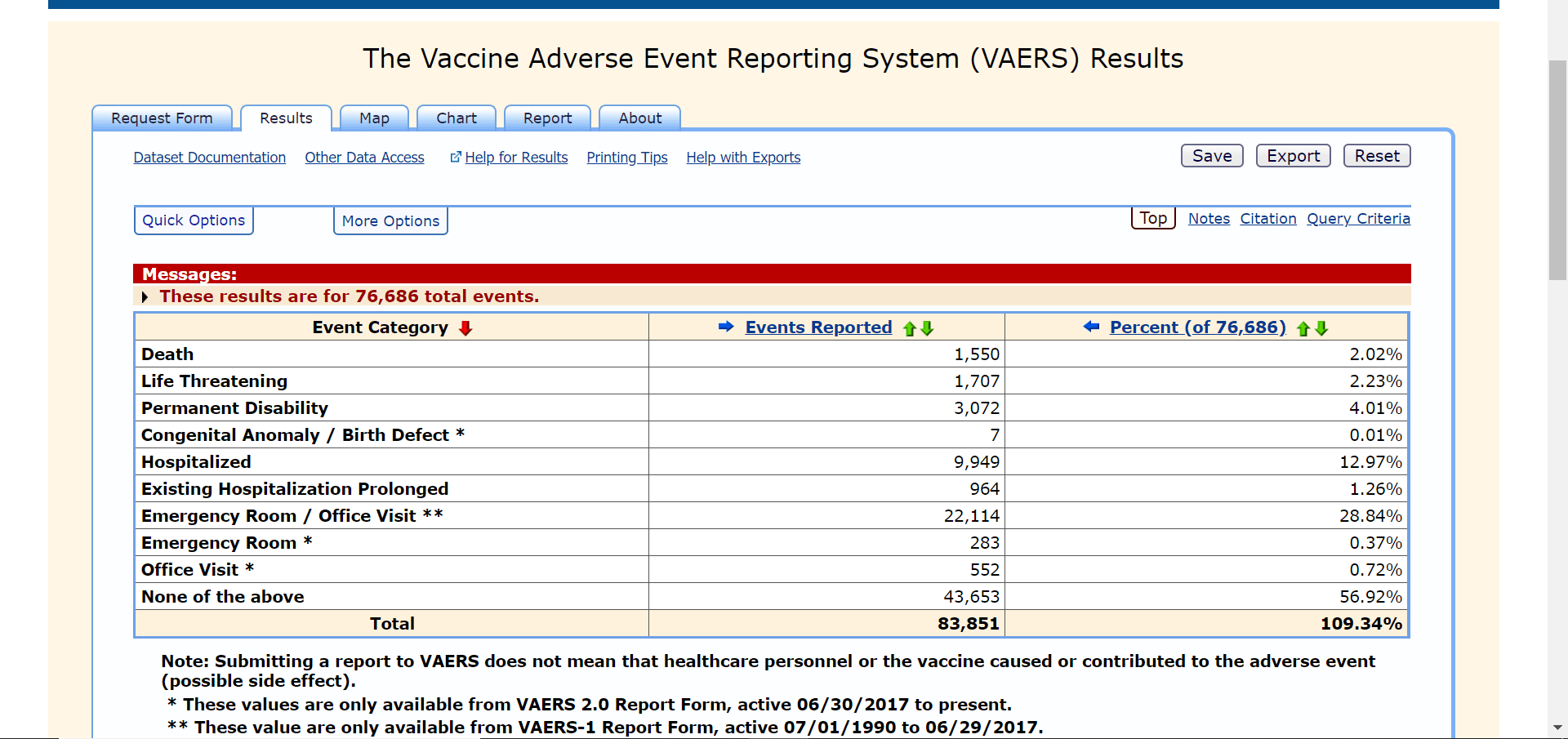
Here is the VAERS report for the hep b vaccine (or vaccines containing the hepatitis b) from 1990 through 2018 just because I figured out how to screen shoot on my laptop now and it’s going to be handy for future posts (keep in mind that VAERS is notorious for underreporting and may only capture 1% of injuries).
The new hepatitis b vaccine for adults is a whole new can of worms I’m going to open just a crack. It was rejected twice by the FDA because of the rate of heart attacks/deaths it caused in clinical trials, but approved it the third time it was brought back (unchanged in formulation) because pharma deserves an a for effort. If you’re curious about it, here are a few articles: [4, 5, 6]
Here is actual footage of ACIP approving it.
And now for the science.
This study describes how the hep b vaccine causes brain inflammation and neurobehavioral impairments in mice:
“In brief, these experiments showed that IL-4 mediates the delayed neurobehavioral impairments induced by neonatal hepatitis B vaccination, which involves the permeability of neonatal blood-brain barrier and the down-regulation of IL-4 receptor. This finding suggests that clinical events concerning neonatal IL-4 over-exposure, including neonatal hepatitis B vaccination and allergic asthma in human infants, may have adverse implications for brain development and cognition.” [7]
Here is a study linking hepatitis b vaccination to autism:
“Findings suggest that U.S. male neonates vaccinated with the hepatitis B vaccine prior to 1999 (from vaccination record) had a threefold higher risk for parental report of autism diagnosis compared to boys not vaccinated as neonates during that same time period. Nonwhite boys bore a greater risk.“ [8]
It’s been heavily linked to multiple sclerosis in adults. [9]
It comes with a heavy dose of aluminum, far above the FDA limit for parenteral nutrition that is 25 mcg. I think the lowest dose for aluminum in the Hep b vaccine options is 220 mcg. If you want to know more about aluminum, future me will link a blog post all about it right here someday.
- https://web.archive.org/web/20180130140510if_/https://www.cdc.gov/vaccines/pubs/pinkbook/downloads/appendices/B/excipient-table-2.pdf
- https://www.sciencedirect.com/science/article/pii/S014296120300855X
- https://www.ncbi.nlm.nih.gov/pmc/articles/PMC4318915/
- https://www.medscape.com/viewarticle/888411
- https://www.reuters.com/article/us-dynavax-techs-fda-idUSKBN1391AR
- https://www.biospace.com/article/death-count-rises-for-patients-on-dynavax-s-hep-b-vaccine-but-overall-rate-was-low-says-the-fda-/
- https://www.ncbi.nlm.nih.gov/pubmed/29751176
- https://www.ncbi.nlm.nih.gov/pubmed/21058170
- https://n.neurology.org/content/63/5/838.abstract
 Informed Health